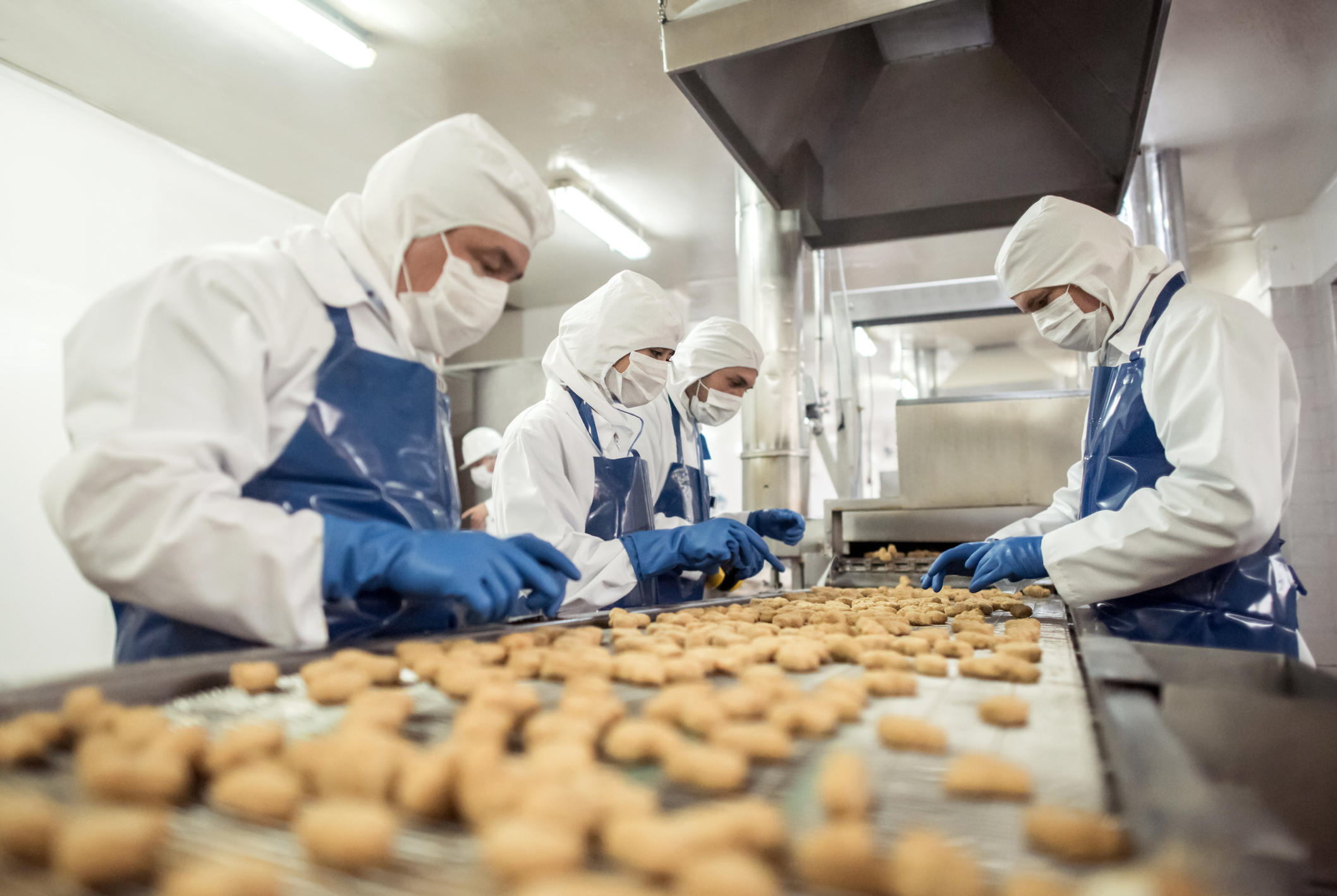
Food safety remains the cornerstone of successful food manufacturing. A single contamination incident can devastate brand reputation, trigger costly recalls, and endanger consumer health. As regulations tighten and consumer expectations rise, manufacturers are turning to automation as a fundamental strategy for ensuring food safety at every production stage.
The importance of food safety in modern manufacturing
Food safety challenges have never been more complex. Global supply chains, increasing product variety, and stringent regulatory requirements create an environment where manual processes alone cannot guarantee consistent safety standards. The consequences of failure are severe: foodborne illness outbreaks, regulatory penalties, and irreparable brand damage.
Automation creates consistent, monitored, and documented processes that maintain rigorous standards hour after hour, eliminating variability and human error that compromise food safety.
What is food safety automation?
Food safety automation refers to the use of advanced technology, sensors, robotics, and intelligent systems to monitor, control, and document processes that affect food safety. This encompasses contamination prevention, hygiene monitoring, quality inspection, environmental control, and comprehensive traceability.
Automated food safety systems operate continuously, collecting data at every stage and responding instantly to deviations. These systems eliminate biological hazards like bacteria, chemical hazards including allergens, and physical hazards such as metal fragments.
Key food safety challenges in food processing plants
Contamination risks exist throughout production facilities. Raw materials may arrive with pathogens or foreign objects. Processing equipment can harbour bacteria. Human handling introduces contamination through inadequate hygiene. Environmental factors like temperature and humidity affect microbial growth.
Cross-contamination between allergens presents significant challenges. Products containing nuts, dairy, or gluten must never contact allergen-free products, yet many facilities produce multiple types on shared equipment.
Maintaining consistent hygiene standards across shifts proves difficult. Different operators may interpret cleaning procedures differently or rush through protocols under pressure. Documentation requirements continue to expand, with regulators demanding detailed records proving safety procedures were followed correctly.
Automation technologies in food processing technology
Vision inspection systems examine products at speeds exceeding thousands of units per hour, detecting foreign objects, verifying product integrity, and identifying defects that human inspectors might miss.
Environmental sensors create comprehensive monitoring networks. Temperature sensors ensure cold chain integrity. Humidity monitors prevent conditions promoting microbial growth. These sensors operate continuously, alerting operators instantly when parameters deviate.
Robotic handling systems minimise human contact with food products whilst maintaining consistent hygiene standards. X-ray and metal detection systems identify physical contaminants, detecting bone fragments, glass shards, and metal contaminants.
Automated cleaning systems ensure consistent hygiene through programmed sequences that guarantee thorough cleaning. Data integration platforms connect these technologies into unified food safety management systems.
The role of smart food manufacturing in safety and quality
Smart food manufacturing transforms food safety from reactive to proactive. Traditional approaches respond to problems after they occur. Smart systems predict and prevent issues before they affect products.
Connected sensors create real-time visibility into every factor affecting food safety. When parameters approach unsafe levels, systems alert operators and automatically adjust processes.
Artificial intelligence analyses patterns to identify conditions that precede safety issues. Machine learning algorithms recognise subtle changes indicating emerging problems, allowing intervention before contamination occurs.
Real-time monitoring and data analytics in food safety
Real-time monitoring provides continuous assurance that safety standards are maintained. Automated monitoring creates unbroken records demonstrating consistent compliance, invaluable during audits.
Data analytics transform raw monitoring data into actionable insights. Predictive analytics forecast potential safety risks based on historical patterns, enabling preventive action.
Automated reporting generates compliance documentation automatically, demonstrating adherence to HACCP, BRC, and FDA standards. Alert systems notify personnel instantly when safety parameters deviate, triggering actions like stopping production lines or initiating cleaning cycles.
Benefits of food safety automation for manufacturers
Enhanced contamination prevention stands as the primary benefit. Automated systems maintain consistent hygiene standards, minimise human contact, and detect contaminants before they reach consumers.
Improved regulatory compliance becomes significantly easier with comprehensive automated documentation. Reduced recall risks result from better contamination prevention and faster issue identification. Automated traceability systems identify affected products precisely, enabling targeted recalls.
Consistent product quality emerges as automated systems maintain optimal conditions throughout production. Operational efficiency improves as automated monitoring reduces time spent on manual checks. Brand protection strengthens through demonstrated commitment to food safety.
Regulatory compliance and traceability with automation
Regulatory requirements continue to expand globally. HACCP principles require identifying critical control points and monitoring them continuously. The Food Safety Modernisation Act mandates preventive controls and comprehensive documentation.
Automated systems meet these requirements more effectively than manual approaches. Continuous monitoring creates unbroken records demonstrating safety parameters remained within acceptable ranges.
Traceability systems track products and ingredients through every stage using barcode scanning, RFID technology, and integrated software. Audit preparation transforms from stressful scrambles to straightforward data retrieval.
The future of smart food manufacturing and food safety
Artificial intelligence will play an increasingly central role in food safety. AI systems will analyse vast datasets identifying patterns invisible to humans, predicting safety risks with greater accuracy.
Blockchain integration will provide immutable traceability records that build consumer trust whilst enabling instant recall precision. Advanced sensors will detect contaminants with greater sensitivity. Biosensors will detect pathogens in real-time.
Autonomous systems will operate with minimal human intervention, making real-time adjustments to maintain optimal safety conditions. As these technologies mature, automation will transition from competitive advantage to absolute necessity for manufacturers committed to protecting consumers and their brands.
FAQ Section
What is food safety automation?
Food safety automation is the use of advanced technology, sensors, robotics, and intelligent systems to monitor, control, and document processes that affect food safety throughout production. It encompasses contamination prevention, hygiene monitoring, automated inspection, environmental control, and comprehensive traceability, operating continuously to detect and respond to safety risks instantly.
How does automation improve food safety in manufacturing?
Automation improves food safety by maintaining consistent hygiene standards, minimising human contact with products, providing continuous monitoring of critical parameters, detecting contaminants before they reach consumers, and creating comprehensive documentation. Automated systems eliminate variability caused by human error, operate without fatigue, and respond instantly to deviations from safe parameters.
What technologies are used in food processing technology?
Key technologies include machine vision inspection systems for detecting defects and contaminants, environmental sensors monitoring temperature and humidity, robotic handling systems that minimise human contact, X-ray and metal detection systems for identifying physical hazards, automated cleaning systems, and data integration platforms that connect all systems into unified food safety management networks.
Why is automation important for food quality control?
Automation is crucial for food quality control because it provides consistent, objective inspection at speeds impossible for humans, operates continuously without fatigue, detects subtle defects and contaminants that might escape manual inspection, creates comprehensive documentation for compliance, and enables real-time adjustments to maintain optimal quality throughout production.
How do smart systems monitor food safety?
Smart systems monitor food safety through networks of connected sensors that track temperature, humidity, air quality, and other critical parameters continuously. These systems collect data in real-time, analyse patterns using artificial intelligence to predict potential issues, alert operators when parameters deviate from safe ranges, and can automatically adjust processes to maintain safety standards.
What is smart food manufacturing?
Smart food manufacturing refers to production facilities that integrate digital technologies, IoT sensors, artificial intelligence, and automation to create connected, intelligent ecosystems. These systems provide real-time visibility into all operations, predict and prevent problems before they occur, optimise processes automatically, and enable data-driven decision-making that enhances both safety and efficiency.
How can automation help meet food safety regulations?
Automation helps meet food safety regulations by continuously monitoring critical control points as required by HACCP, creating detailed, unbroken records demonstrating compliance, automatically documenting corrective actions when deviations occur, providing comprehensive traceability from ingredients to finished products, and generating audit-ready reports that prove adherence to standards like BRC, FDA, and FSMA requirements.
What is the future of automation in food safety?
The future of automation in food safety includes artificial intelligence systems that predict risks with greater accuracy, blockchain integration providing immutable traceability records, advanced biosensors detecting pathogens in real-time, autonomous systems operating with minimal human intervention, and augmented reality guiding personnel through complex procedures. These technologies will make automation essential rather than optional for food manufacturers.